Bust Out Sparkle: Reclaiming the Movement that Allow Us to Take Up Space
In my early twenties, I was in a band called Maya Rides Away. We created our own record label and gave it a name that still makes me smile all these years later: Bust Out Sparkle.
Our logo was a star.
I have been thinking about that star lately because of an inquiry from my studies in Chi for Two® Embodiment Coaching:
How okay or not okay is it for you to be a star?
There is something about this question that reaches far beyond whether we are comfortable with attention. It asks us to consider what we have learned about being visible, taking up space, expressing ourselves, and allowing our particular radiance to move outward into the world.
And it is important to acknowledge - being a star is not equally safe for everyone.
The Movements We Learned to Inhibit
Long before we have language for beauty standards, fatphobia, racism, ableism, ageism, sexism, or other systems that determine whose bodies are welcomed and whose bodies are scrutinized, we are already learning something about visibility. We notice which bodies are celebrated, protected, listened to, and represented as beautiful. We also notice which bodies are mocked, ignored, controlled, feared, or asked to become smaller.
Our nervous systems pay attention.
Our relationship with visibility is also part of a multigenerational story. We inherit ways of moving through the world from families and communities that were themselves shaped by the conditions necessary for survival. There may have been very good reasons for the people who came before us to learn not to speak too loudly, want too much, draw attention, show anger, express sexuality, challenge authority, or allow themselves to become too visible.
In embodiment work, I have become increasingly interested not only in the movements we make, but in the movements we inhibit in order to belong and survive.
An impulse arises to reach and is interrupted. A desire to push away becomes contained. Something inside us wants to extend outward, and instead we contract.
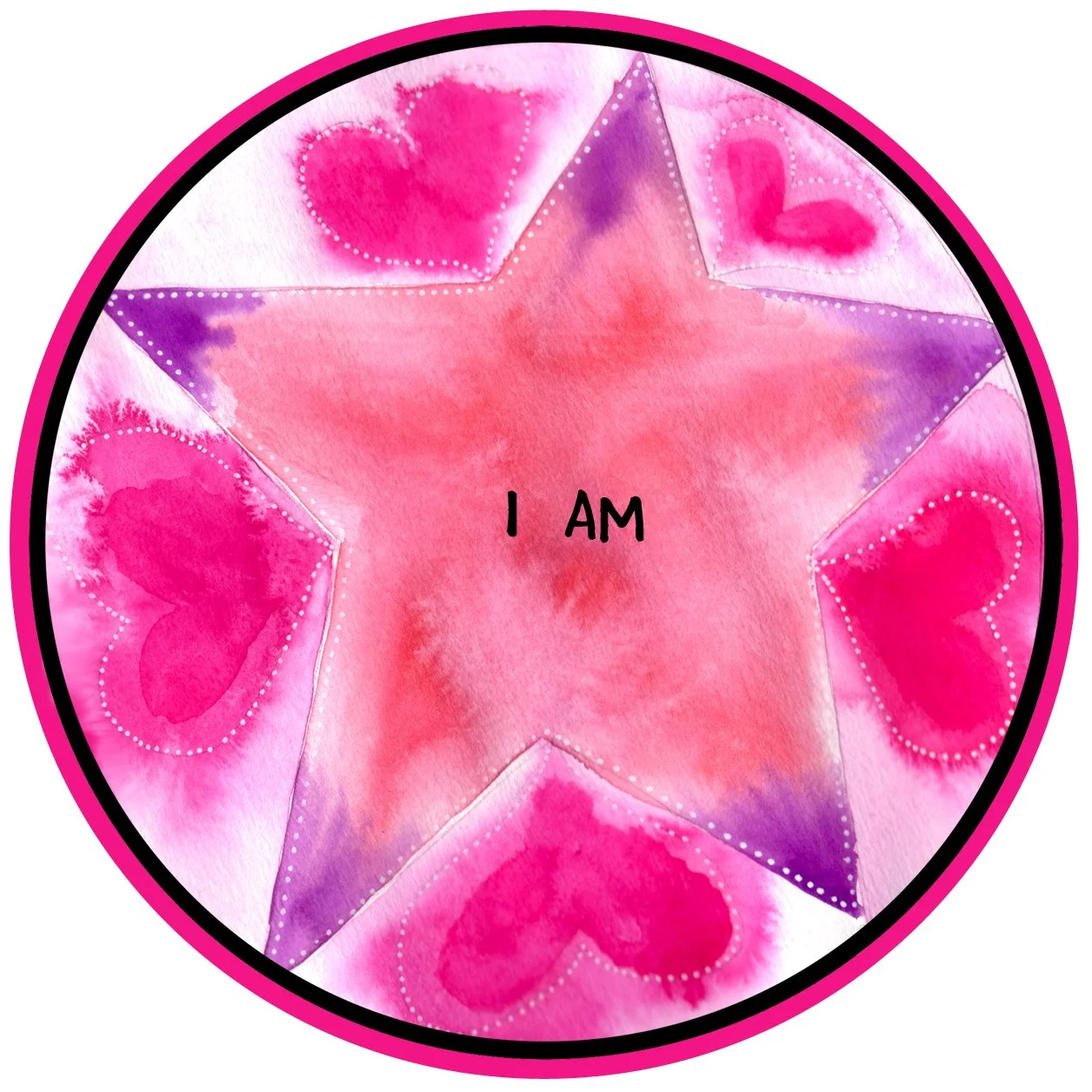
One emanation of embodiment we explore in Chi for Two is Navel Radiation, the organization of movement from the center of the body outward through the limbs, like the rays of a star. Before “being a star” became associated with beauty, celebrity, achievement, or exceptionalism, there was this fundamental bodily capacity to radiate from our center.
And then we encounter the world.
We learn where our radiance is welcome and where it is not, and our bodies adapt accordingly.
Understanding these conditions can change how we approach body image. Instead of asking why we are not more confident, we might become curious about what our bodies have experienced when we have been visible. Instead of demanding that we love our bodies more, we can wonder what happened to the movements through which we once reached, pushed, expanded, expressed, and radiated ourselves into the world.
Practicing Our Way Back to Radiance
Embodiment practices can give us opportunities to revisit these movements slowly and with support. We might begin in a Squish Pose practice, intentionally experiencing contraction, and then use contralateral movement to gradually explore a more expansive, Space-Claiming practice.
The goal is not to teach our bodies that expansion is always better. Contraction carries wisdom, too. There are circumstances in which becoming smaller, quieter, or less visible has protected us, and there may still be circumstances when it does.
The possibility is having more choice.
As we move between contraction and expansion, we can notice where something becomes difficult. Maybe extending an arm farther brings embarrassment. Maybe taking up more physical space creates anxiety. Maybe our body wants to laugh, freeze, apologize, or retreat. These responses can become clues to the conditions under which we learned to inhibit our radiance.
Because so many of these patterns were formed in relationship, we may also need relationship to work through them. Sometimes we need someone nearby while we experiment with a movement we once had to inhibit. We need experiences of becoming bigger, brighter, louder, stranger, more expressive, or more fully ourselves and discovering that someone remains with us.
We need support, accompaniment, and practice as our bodies discover that other possibilities exist.
This need is at the heart of Wild Beauty Embodiment Coaching, where we can work through movement, sensation, expression, voice, and the embodied experience of reclaiming movements that have been interrupted or inhibited.
When I think back to that little star we chose for Bust Out Sparkle all those years ago, I wonder whether some part of my younger self already understood something I am only now finding language for.
Sparkle is not something we have to manufacture or earn by becoming acceptable enough to be seen. Radiance has been there all along, shaped by generations of learning about when it was safe to emerge and when it needed to retreat.
Our work may be to understand those conditions, honor the intelligence of the ways we learned to survive, and find the support we need to experiment with what becomes possible now.
Wild Beauty Inquiry
When you imagine yourself as a star, radiating from your center and taking up the space that is yours, where does your body say yes, and where does it say, “Not here, not with these people, not yet”? What might those places teach you about the conditions your body needs in order to feel safe enough to shine?
If you are drawn to exploring these patterns more directly through movement, sensation, expression, and developmental embodiment, Wild Beauty Embodiment Coaching offers another pathway into this work.
You are welcome to reach out to explore what kind of support and accompaniment might help you find more freedom to take up space, radiate from your center, and discover what Bust Out Sparkle might mean in your body now.